

This post is part of our complete guide to Car Accident & Whiplash Treatment in Las Vegas. Browse the guide for more in-depth information on treatments, symptoms, and recovery in Las Vegas & Henderson.
Can Chiropractic Still Help Me if My Accident Was Months or Years Ago?
Yes—can chiropractic still help me if my accident was months or years ago? In many cases, it’s not too late to benefit: we often see meaningful improvements in pain, stiffness, mobility, and day-to-day function even when the accident was a long time ago. While earlier care usually leads to faster and more complete recovery, late care is almost always better than never addressing the lingering effects.
Suffering from pain after an accident? Southern Nevada Chiropractic offers same-day appointments in Las Vegas & Henderson. Call Now →
Why people still hurt long after a crash
We regularly meet local Las Vegas and Henderson drivers who expected their pain to “just go away,” only to find months later that their neck, back, or headaches keep returning. This is common after auto accidents because the initial injury can trigger a chain reaction: the body adapts to protect the irritated area, movement changes, and the tissues heal—but not always in the most functional way.
At Southern Nevada Chiropractic Car Accident Treatment Centers, our role is to evaluate what’s still not moving or functioning correctly, then help you rebuild healthier motion and stability using evidence-informed chiropractic approaches and rehabilitation strategies.
Common delayed or persistent symptoms we see
If you’re asking can chiropractic still help me if my accident was months or years ago? it’s often because you’re experiencing one or more of these issues:
- Neck pain, upper back tightness, or mid-back soreness
- Low back pain that flares with sitting, standing, or lifting
- Headaches (especially tension-type headaches that start in the neck)
- Muscle spasms, knots, or a feeling of “guarding”
- Reduced range of motion (turning the head, bending, twisting)
- Joint stiffness first thing in the morning or after long drives
- Sleep disruption due to discomfort
- Ongoing limitations in work, exercise, or daily chores
The “wheel alignment” analogy: what it explains (and what it doesn’t)
One of the clearest ways to understand delayed recovery is the wheel alignment analogy. Imagine hitting a curb and knocking your wheels out of alignment:
- If you correct the alignment right away, the tires can keep wearing evenly.
- If you drive for six months with the wheels off, one tire may wear unevenly and develop a bald spot.
- You can still fix the alignment later, but you might not fully undo the wear that already occurred.
Your body can behave similarly after an accident. When joints and soft tissues are irritated, we may move differently—subconsciously. Over time, that compensation can lead to muscle imbalance, joint restriction, and chronic tightness. The difference is: we can’t simply “replace the tire.” Instead, we focus on restoring better mechanics and rebuilding capacity through a plan that matches your situation.
What changes when treatment is delayed
When someone waits months or years, we can still help, but we also need to be realistic about what the body may have developed in the meantime. If you’re wondering can chiropractic still help me if my accident was months or years ago? these are the most common “time-related” factors that influence recovery:
1) Inflammation can become persistent
Early on, inflammation is part of healing. But when a joint stays irritated and movement stays limited, symptoms can become more stubborn. That’s one reason earlier care tends to progress faster.
2) Joint stiffness often increases over time
Restricted joints can become harder to mobilize the longer they’ve been stuck. It doesn’t mean improvement is impossible—it means the plan may require more consistency and a stronger emphasis on mobility work.
3) Scar tissue can limit motion if it forms disorganized
Scar tissue is a normal part of healing. The goal isn’t to “prevent” it; the goal is to help your body lay it down in a more organized way through appropriate movement, manual therapy, and rehab. When healing happens without guided rehab, the tissues may become less elastic, contributing to stiffness and discomfort.
4) Muscles may tighten to protect the area
The body often responds to injury by guarding: muscles tighten to stabilize. Over time, that guarding can become chronic muscle spasm and trigger points. It’s also common for one side to feel “tight” while the other side feels weak or overstretched—similar to how misalignment changes wear patterns.
5) Degenerative changes may start when motion stays limited
When a joint is not moving well for long periods, degenerative processes can become more likely. We can’t “turn back the clock,” but we can often improve motion, reduce stress on the area, and help you function better going forward.
So, can chiropractic still help six months later? Often, yes.
We want to be clear and helpful: can chiropractic still help me if my accident was months or years ago? In many cases, yes—especially when the ongoing problem is joint restriction, muscular imbalance, and movement limitations that never fully resolved.
Many patients who start late still report improvements such as:
- Better neck and back range of motion
- Reduced headaches and muscle tension
- Less joint stiffness during daily activities
- Improved sleep comfort
- Better tolerance for driving, working, and exercise
- More confidence moving normally again
What determines how much improvement is possible?
When people ask can chiropractic still help me if my accident was months or years ago? the honest answer is: results vary. In our experience, the most important variables include:
- Nature of the original injury: strains/sprains, whiplash-type injuries, or more complex tissue involvement
- Time since the accident: longer time often means more compensation patterns to unwind
- Age and overall health: healing and tissue tolerance differ by person
- Current mobility and strength: how much deconditioning has occurred
- How much structural damage is present: some changes cannot be fully reversed, but function can often improve
- Lifestyle factors: movement habits, hydration, sleep, stress, and posture
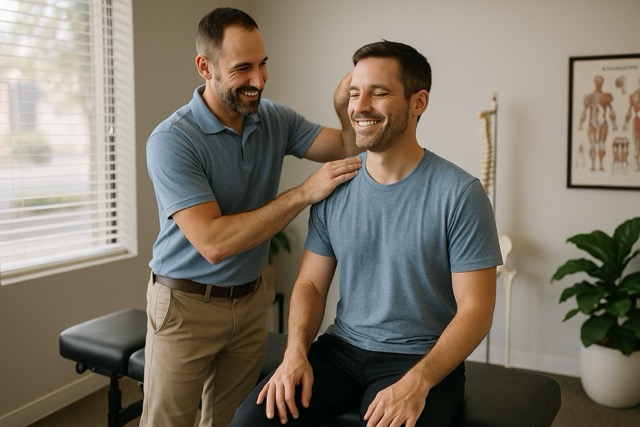
How we approach late-start accident recovery in Las Vegas and Henderson
At Southern Nevada Chiropractic, our accident treatment approach is designed for real life. People come in busy, stressed, and frustrated that they “should be over it by now.” Our focus is to:
- Identify the specific areas that are restricted, irritated, or compensating
- Reduce pain and muscle guarding
- Restore healthier motion patterns
- Rebuild strength and resilience so symptoms don’t keep returning
Because we have multiple convenient clinic locations across the Las Vegas valley, we also try to make consistent care easier for local patients who are juggling work, family, and commute time.
Accident-related conditions we commonly treat
Our Las Vegas and Henderson chiropractic clinics frequently help patients dealing with:
- Whiplash-type injuries
- Neck pain with reduced mobility and headaches
- Back pain (including persistent strains and joint irritation)
- Sprains and strains from sudden impact forces
- Sports injuries and overuse problems that can be aggravated by an accident
Treatment options we may include (based on your exam)
Every plan is personalized, but common components of our chiropractic care and rehab approach may include:
- Chiropractic adjustments to help restore joint mobility and reduce mechanical stress
- Manual soft tissue therapy for tight, guarded, or spastic muscles
- Spinal traction when appropriate for certain back/neck presentations
- TENS (transcutaneous electric nerve stimulation) for pain modulation
- Therapeutic exercise and stretching to rebuild balance and stability
- Nutritional counseling and lifestyle modification to support recovery
A practical timeline: what to expect when you start late
If you’ve delayed care, it’s normal to worry that treatment will be long, painful, or pointless. The truth is more balanced. Older restrictions can take more consistent work, and breaking up long-standing tightness or scar tissue sensitivity can feel uncomfortable at times—but many patients still feel relief and improved function as the body starts moving better.
Here’s a simple 5-step roadmap we often follow
- Thorough evaluation: we look at movement, posture, joint motion, soft tissue tension, and symptom triggers.
- Calm the irritation: we focus on reducing pain, spasm, and protective guarding.
- Restore motion: we work on the restricted joints and tight tissues that are limiting range of motion.
- Rebuild strength and coordination: targeted exercises help prevent relapse and reduce compensation patterns.
- Progress toward independence: we transition you to a sustainable routine that supports long-term function.
Why movement habits matter so much in chronic post-accident pain
One of the biggest drivers of persistent symptoms is inactivity. When we don’t move, we often lose mobility, circulation, and strength—exactly what the injured area needs to regain confidence and capacity.
If you’re asking can chiropractic still help me if my accident was months or years ago? we’ll usually also talk about the basics that make care work better:
- Consistent movement: gentle daily mobility work is often more effective than “once-a-week big stretches.”
- Exercise and stretching: appropriate strengthening helps prevent recurring flare-ups.
- Hydration: drinking enough water can support tissue health and recovery.
- Diet quality: improving nutrition may support inflammation management and healing capacity.
- Posture and ergonomics: especially for office work and long drives common in the Las Vegas valley.
Red flags: when you should get evaluated sooner rather than later
Even though it’s often not too late, there are situations where we recommend getting assessed promptly rather than “waiting it out” again. Consider scheduling an evaluation if you have:
- Pain that’s progressively worsening
- Frequent headaches that started after the accident
- Ongoing sleep disruption from discomfort
- Noticeable loss of range of motion
- Recurring muscle spasms or tightness that won’t release
- Difficulty returning to normal activities (work, gym, household tasks)
Even when symptoms seem “manageable,” they can still be a sign that the body is compensating—often at the expense of other joints and muscles.
Key Takeaways
- It’s usually not too late: can chiropractic still help me if my accident was months or years ago? In many cases, yes—meaningful improvement is still possible.
- Earlier is better, but late is often better than never: delayed care may take longer because stiffness, muscle guarding, and scar tissue patterns can build over time.
- Chronic pain often involves more than “damage”: compensation, reduced motion, and muscle imbalance frequently drive ongoing symptoms.
- Plans should be personalized: outcomes depend on injury type, time since accident, age, health, and lifestyle factors.
- Rehab matters: adjustments plus therapeutic exercise/stretching and supportive therapies (like TENS, traction, and soft tissue work) can improve function.
Where to Go From Here
If you’re still asking yourself can chiropractic still help me if my accident was months or years ago? we encourage you not to settle for “this is just how it is now.” At Southern Nevada Chiropractic Car Accident Treatment Centers in Las Vegas and Henderson, we’ll start with a thorough evaluation and build a care plan aimed at improving mobility, reducing pain, and restoring daily function. If you’re ready to take the next step, schedule pain relief today so we can help you feel better faster.
Frequently Asked Questions
Is it really worth seeing a chiropractor if my accident was years ago?
In many cases, yes. Even years later, chiropractic care and targeted rehab can improve mobility, reduce muscle tension and headaches, and help restore daily function—though results vary by person and injury.
Why do symptoms show up months after an accident?
Symptoms can be delayed because the body compensates to protect injured areas. Over time, restricted joints, muscle guarding, and poorly organized scar tissue can contribute to stiffness, pain, and recurring flare-ups.
What kinds of problems can chiropractic help after a car accident?
Chiropractic care commonly helps with whiplash-related neck pain, back pain, headaches linked to neck tension, joint stiffness, reduced range of motion, and chronic muscle tightness after an auto accident.
Will chiropractic erase all the effects of an old accident?
Not always. We can’t promise every change can be reversed, especially when symptoms have been present for a long time, but many patients still experience meaningful improvements in pain, movement, and function.
What treatments might be included in a late-start recovery plan?
Depending on your evaluation, a plan may include chiropractic adjustments, manual soft tissue therapy, therapeutic exercise and stretching, spinal traction, TENS, and lifestyle guidance such as hydration, nutrition, and activity strategies.
What affects how quickly I improve if I start treatment late?
Progress depends on the original injury, how long it’s been, your age and overall health, current mobility and strength, the presence of structural damage, and lifestyle factors like movement, exercise, hydration, and posture.
Ready to Feel Better?
Our Las Vegas & Henderson chiropractors are ready to help — same-day appointments available.

Dr. Michael Reiss, DC has practiced chiropractic in Las Vegas since 1998. A graduate of Life Chiropractic College West, he founded Southern Nevada Chiropractic to specialize exclusively in car accident and injury recovery across the Las Vegas Valley.
He is the author of The Las Vegas Car Accident Victim’s Health Guide and contributes to The Modern Physician Letter, a national publication for medical doctors.
His clinics have earned 2,000+ five-star Google reviews across 9 Valley locations.
Originally spoken aloud by Dr Michael Reiss DC. Edited with AI assistance and reviewed before publication.
Further Reading: Whiplash Treatment
- Stuck After Physical Therapy? What to Do When Your Recovery Plateaus
- Will You Keep Treating Me Just Because I Have a Claim? How We Avoid Overtreatment
- Multi-Car Pileups and Multiple-Impact Crashes: Why They’re Different and Harder to Treat
- Beyond Pain Relief: What Real Long-Term Recovery and Getting Back to Function Looks Like
- The First 72 Hours to Full Recovery: Our Step-by-Step Crash-to-Rehab Pathway
→ Complete Guide: Car Accident & Whiplash Treatment in Las Vegas